
Homily by Rev. Toan Do
Rabbi, who sinned, this man or his parents, that he was born blind? In the late fourth century and lasting until the early part of the fifth century, St. Augustine of Hippo was very well known as a theologian. And a couple of his many teachings remain to this day. One is the teaching on the original sin. The other part, which the church since then has not upheld as a part of the church teaching, namely predestination.
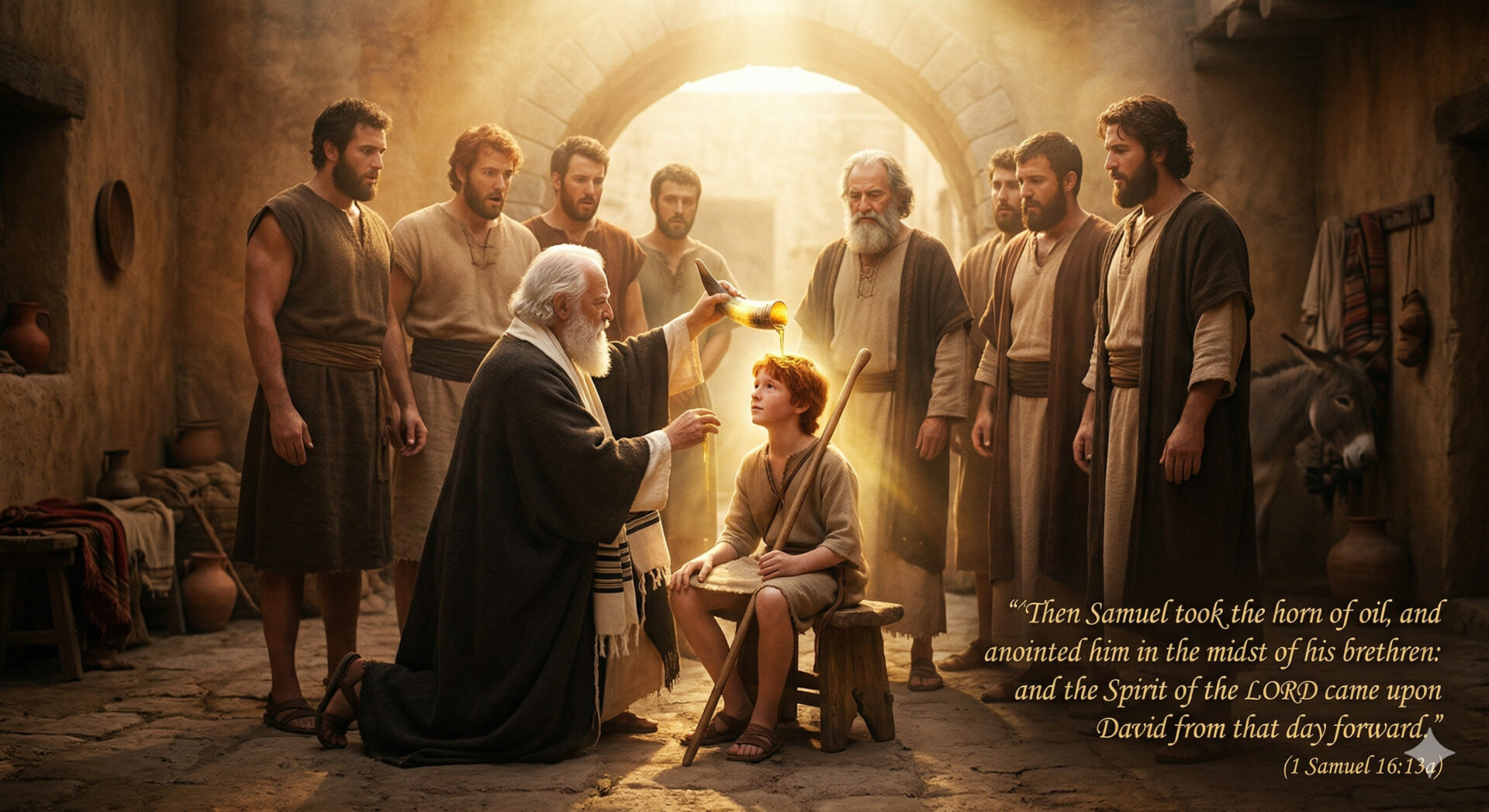
The original sin we are all familiar with, which is part of our teaching on the sacrament of baptism. Another part famous to Augustine was the predestination, namely Augustine argued that some people were born in sin or born evil, like the man born blind in the gospel today. And for good or for bad, scripture made some references to it. For example, in the first reading today from the first book of Samuel, the fact that David was chosen out among his brothers; not only was he the youngest one, but also chosen now to be the one who was anointed by Samuel in the name of God. The Old Testament speaks volumes of the Israelites, the Hebrew people being the chosen ones of God. Not until the time of Jesus, the whole understanding of certain people are chosen to be blessed. Others were chosen to be evil or live in sin. Jesus dispelled that notion. And unfortunately, later on, Christians continued, for example, Saint Augustine continued to believe that certain people were born in sin, certain people were born evil; and to some extent I agree with Augustine that there is evil in this world. Needless to go into details of our understanding of evil. But today, the question that was raised at the very beginning of the long dialogue between Jesus, his disciples, the Pharisees, and this man born blind, gives us another insight into who we are and how blessed we are in the eyes of God.
Who sinned, rabbi, this man or his parents, that he was born blind. And the fact that Jesus tells in his reply saying that neither he nor his parents sinned. It is so that the works of God might be made visible through him. John, in a very radical way, leads us into another step, understanding beyond our physical shortcomings, our physical illnesses. Hopefully this will tie into what today, not only in the first reading which reminds us of the blessing with oil, but also in our Eucharist today, in our liturgy today, we administer the sacrament of anointing to all of us who are ill in body, in mind, and in spirit. Jesus once again reminds those who were with him that our physical shortcoming, our physical illness, is part of our human nature. It happened so Jesus did not blame his parents or this man born blind, but it happened, certain things that happened, so that the grace and mercy of God when it happened, when occurred, can give praise to God himself. But on the other hand, human beings often do the opposite. As we see later on in the middle of the conversation, the Pharisees told this man that you were born totally in sin, and now you try to teach us the fact that they looked down on this man born blind, implied to us that to the time of Jesus, up until the time of Jesus, those who were born less fortunate than others were considered, thought of, and believed to be sinners. That said, Jesus reminds us - God has his own way of healing us. It is only through the grace of God that blindness from this man was done for him.
I would like to share a personal story. For months leading up until about two weeks ago, I was thinking of what I was going to do for a week or two away from my work here. And about three weeks before I left, I made a decision to spend a week on retreat. And I wanted to do something different than going to the monastery or a seminary and sit there in quiet, eating three meals a day and praying and so on. So I wanted to do different, something different. I decided to go to some orphanages. So, I did. And so about two, three weeks ago I did, and it happened. My family for over two decades now have been helping these orphanages in central North Vietnam and just historically, it's now history, if you recall, during the Vietnam War this very area was known to be sprayed by Agent Orange. The estimate was 15 to 30,000 million gallons of Agent Orange was sprayed. For good or for bad, many of them were either recipients of this or were exposed to it. And I happened to meet in one of the three orphanages where I spent time there, the first week there, this one lady. She's now in her sixties, and the time is right. She was probably the recipient of this chemical. She was dropped by her parents, whom no one knows now, right in front of the Sisters' doors one morning early. And she was born with no eyes.
And because the Sisters believed she was only a few weeks, a few months, old, the Sisters also believed that because of her conditions, her parents could not think or even imagine how to raise her up. So, the Sisters took her in among several hundred others. All of them have their own stories. But this particular story stood out, and she was raised with the Sisters. All she knew was how gracious and how good the Sisters were to them and to her. And it's amazing that without eyes, she was given the gift of hearing. If she listens to someone speak one time, she'll never forget that person's sound. She is a music composer in her own right, and she is able to do many other things that we normal human beings, I, for one, could not imagine - like singing so well. I said to them, if I sing, you'll run out of this place. But she is a music composer for their house. She sings at mass, and she would lead other people like a musician, a real musician; not knowing how to read, but to imitate the sounds of others.
This is one, true, clear example of the shortcomings of our physical illness have been done. And the work of God happened to this person so that those who live with her, she has such joyful celebration. God is all that she believes in, and the Sisters were all her family, and the people with her were all her community. She knew three things: God, the Sisters, and her housemates. God's grace was truly
done on this lady.
And, of course, there are many other stories, but this example speaks volumes of what Jesus says in the gospel today regarding the man born blind. Certain people, Jesus dispels the notion of those who were thinking that physical illness or physical shortcomings were part of sins, were part of evil. Jesus dispels that very notion and helped the people, in his own time and our time, that God has his own way of healing people. We are today, once again, invited to allow the grace of God's works to work through us through the sacrament of anointing to be healed in body, in soul, and in mind.
HOMILY
Rev. Toan Do, March 15, 2026
1 Samuel 16:1b, 6-7, 10-13a
at Soundcloud