
No Results Found
The page you requested could not be found. Try refining your search, or use the navigation above to locate the post.
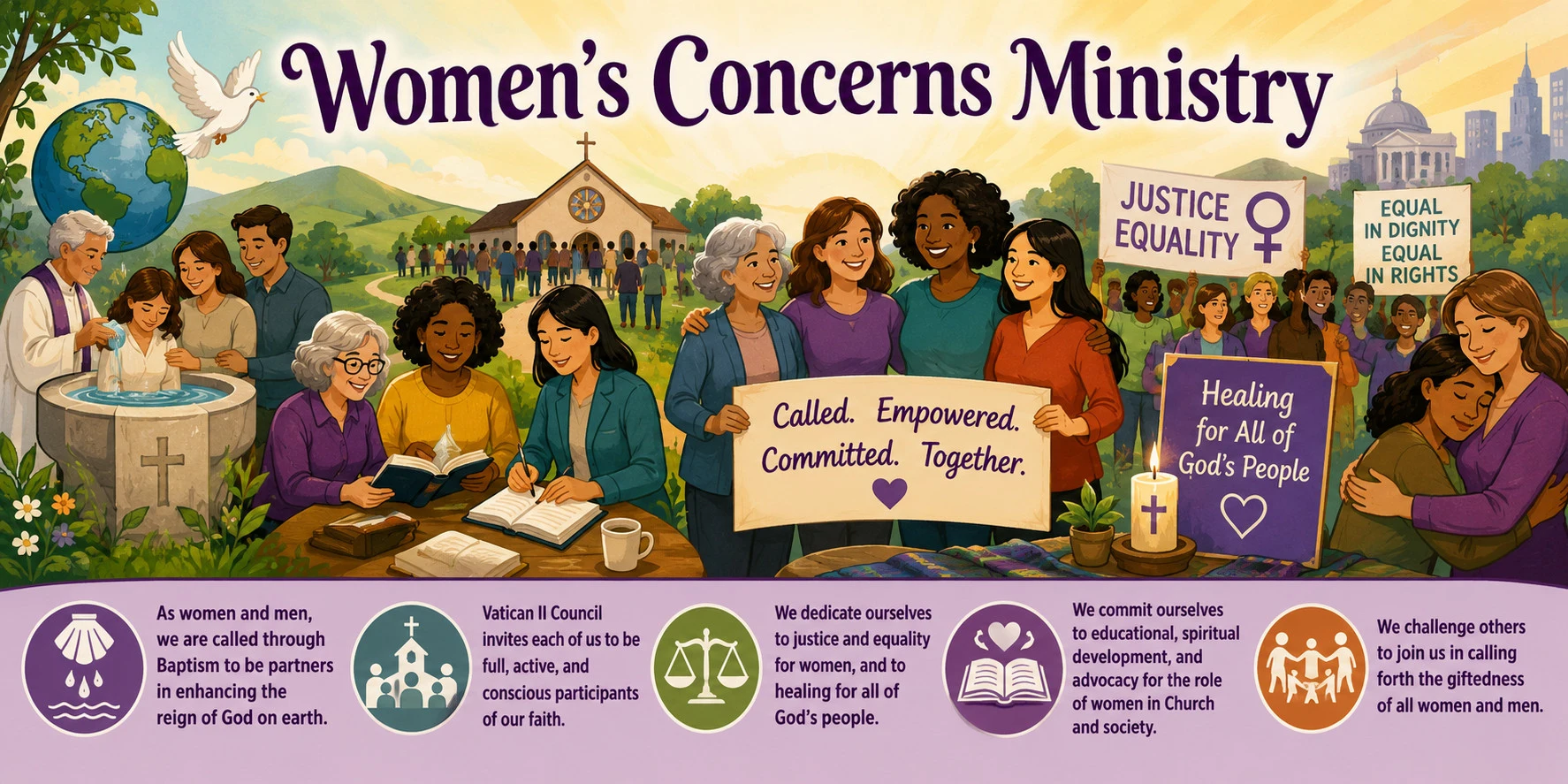
This committee supports women in the Church and in society by studying women of the Bible and the Church, promoting inclusive language in scripture, spotlighting the needs and the gifts of women and girls, and hosting the annual Mary Magdalene feast day celebration.
As women and men, we are called through Baptism to be partners in enhancing the reign of God on earth. Vatican II Council invites each of us to be full, active, and conscious participants of our faith. We dedicate ourselves to justice and equality for women, and to healing for all of God’s people. We commit ourselves to educational, spiritual development, and advocacy for the role of women in Church and society. We challenge others to join us in calling forth the giftedness of all women and men.
Monthly meetings
Mary Magdalene went and announced to the disciples, 'I have seen the Lord,' and what he told her.John 20:18
The Women’s Concerns Committee will be regularly sharing the lives of some amazing women in the Bible, women saints, and mystics for the parish to read. You may know some of them, but we also hope to share with you the lives of women who are not well known.
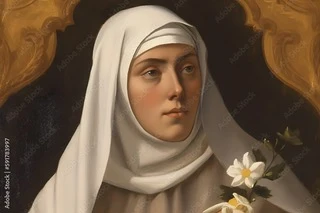
In 1309, amid Italian city-state disputes and external threats of invasion, the pope and the Curia relocated to the French capital, Avignon. This Avignon Papacy became characterized by luxurious lifestyles, corrupt political favoritism, and widespread confusion about spiritual leadership. The true guide to peaceful unity, inclusion, personal integrity, and discerning right conscience was the intellectual and spiritual environment of Tuscany in 1347, when Caterina Benincosa and her twin, Giovanna, were born to Lapa Piagenti and Jacopo di Benincasa on March 25. Giovanna died shortly after birth.
At an early age, Catherine developed a strong religious awareness which influenced her generosity to Siena’s suffering victims of the plague and crippling poverty. Against her parents' wishes, Catherine firmly rejected both marriage and a cloistered convent life, declaring her choice of a Christ-centered lay life. In 1363, at 16, Catherine became a Dominican Tertiary committed to study, prayer, preaching, and community.
Catherine’s faith journey is recounted in her dictated Dialogues. Catherine had no formal education, but her Dominican affiliates taught her to read as a tool for study, leading her to proclaim, “Love follows knowledge.” Catherine’s prayer life was rooted in Scripture, which led her to understand that “… Jesus said, I am the way”; that Christ was the “… Bridge of My only-begotten Son”, … through which “the earth of your humanity is joined to the greatness of the Deity…”. In her dictated letters and writings, Catherine called contemporaries to:
“Be who God meant you to be and you will set the world on fire.” “We've had enough exhortations to be silent. … Speak the truth in a million voices. It is silence that kills.”
For Catherine, the most profound prayer was to actively LIVE as Jesus had lived. A Christ centered life transformed one’s very being into an image of God, ”who God meant you to be”. Loving union with God was inevitably bound to love of neighbor. “To show the love we have to Him, we ought to serve and love every rational creature.” People living gospel values in both great and simple ways speak truth to a world unaware of, or hostile to, God’s goodness and provident blessings. Human example could be “a million voices” for changing minds and hearts, as Jesus did.
Catherine directly engaged Church and secular officials in her letters and writings. Some contemporaries respected and acted on Catherine’s advice to “knoweth things as they are and not as they are said or seem to be ….” Others criticized her informal style and bold, unauthorized reform activism. Her faith-filled response: “Nothing great is ever achieved without much enduring.” In 1377, Catherine’s influence prompted Pope Gregory XI to return the Curia to Rome. Though the return was temporary, Catherine endured until her death on April 29, 1380. Six hundred years later, on October 4, 1970, Pope Paul VI
confirmed Catherine’s wisdom and leadership by officially declaring her a Doctor of the Church.
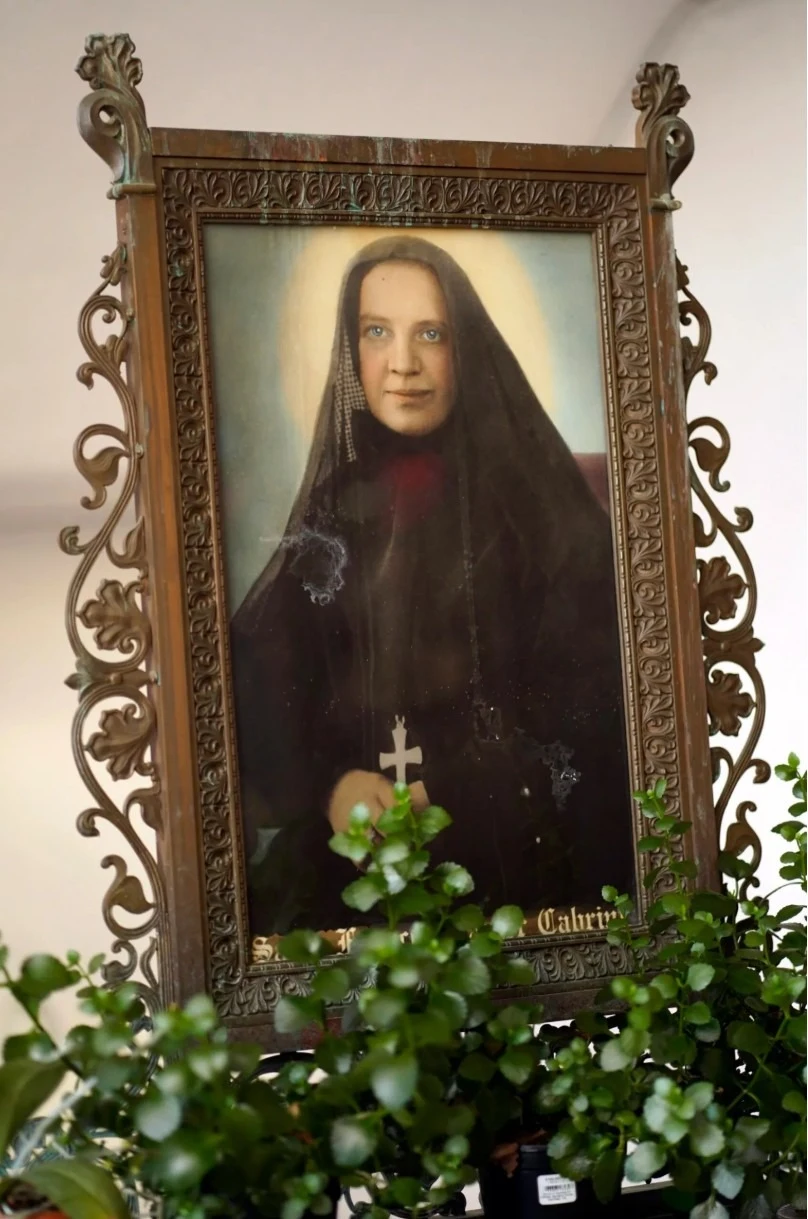
Because St. Frances Xavier Cabrini is the patroness of immigrants, she was chosen as our first example of a holy woman whose quiet faith and perseverance continue to inspire the Church today. Although not as widely known as some saints, Mother Cabrini was a remarkable leader of prayer, compassion, and courage.
Today, immigrants throughout our country and around the world continue to face hardship and persecution, making her example especially meaningful in our time.
Born on July 15, 1850, in Lombardy, Italy, Frances was the 10th of 11 children. Her family deeply nurtured her faith from an early age. Though she longed to become a missionary, she first worked as a schoolteacher after being refused admission to a religious community.
After many struggles and setbacks, she eventually professed her vows and founded her own religious order:
The Missionary Sisters of the Sacred Heart of Jesus.
With great determination, Mother Cabrini traveled to Rome and obtained permission from Pope Leo XIII to come to America with her sisters to minister to Italian immigrants in New York City.
Although Archbishop Corrigan did not initially welcome her, Mother Cabrini remained steadfast in her mission to establish an orphanage for immigrant children. Over time, he became one of her greatest supporters, helping her found an orphanage in West Park, New York.
St. Frances Xavier Cabrini died in 1917 at the age of 67 and was canonized in 1946.
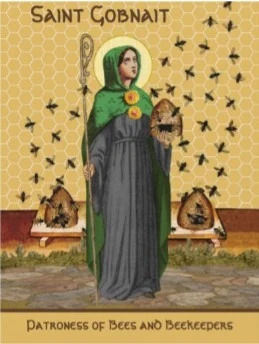
St. Gobnait, also known as St. Abigail or St. Deborah, is a little-known Irish saint, born around the 6 th century in Co. Clair, Ireland. As the story goes, St. Gobnait was told by an angel to go to Ballyvourney, Co. Cork, where she would find a herd of nine deer (Epiphany?). There she would begin her ministry of pastoral service and Christian charitable work, mostly caring for the sick. In early Celtic folklore and religious symbolism, the soul departs from the body in the form of a bee or butterfly. Not surprisingly, St. Gobnait became a beekeeper. She used honey to treat many illnesses, even saving the town from the plague. But she also used the bees to chase off evil. St. Gobnait is the patron saint of honeybees, beekeepers, and apiculture.
We shape Epiphany’s advocacy efforts on pertinent issues before the state legislature and in the national political arena and encourage parishioners to take meaningful action on those issues.
CLOUT (Citizens of Louisville Organized and United Together) takes action with congregations from across the city to solve community-wide problems that impact affordable housing, aging in place, literacy, mental health, and other issues.
This team works to raise awareness of our Christian obligation to care for our Common Home, the Earth, and energize a response to its degradation and restoration.
As a parish community, we're committed to a journey of ecological conversion, transforming our hearts and our habits to 'cultivate and care' (Genesis 2:15) the precious gift of God’s creation for the benefit of all generations.
Meet regularly to read and record eyeglass prescriptions for Kendall
Optometry Ministry, which sends glasses to people in developing countries.
Habitat for Humanity - Epiphany Build Team: Join a team of volunteers to collaborate with other parishes to build a house bi-annually and work building and rehabbing homes at other sites.
Respond to hunger and poverty in the metro area, sponsor parish-wide collections at Lent and Thanksgiving, and coordinate other relevant programming.
Provide Catholic ministry to incarcerated people at Luther Luckett Correctional Complex.
A ministry team plans safe, inclusive and timely forums encompassing
issues of our times. The presentations engage members in dialogue as they view issues through the lens of Catholic Social Teaching.
Solidarity Committee (formerly Twinning Committee): Participate in fostering relationships with local, state, national and international communities in need by working collaboratively with local leaders of vibrant external ministries. Committee members respond in ways that are most helpful.
St. Vincent De Paul - Epiphany Conference: Provide emergency funding to those needing rent or utility assistance. Work closely with Eastern Area Community Ministries and other local ministries and SVDP conferences to serve the needs of low-income people.
Oversees the parish's Ten Percent funds, coordinate Sharing Grant, Annual Grant programs, and all funds distributed through the parish Ten Percent commitment. Members of this leadership team are appointed.
This committee supports women in the Church and in society by studying women of the Bible and the Church, promoting inclusive language in scripture, spotlighting the needs and the gifts of women and girls, and hosting the annual Mary Magdalene feast day celebration.
As women and men, we are called through Baptism to be partners in enhancing the reign of God on earth. Vatican II Council invites each of us to be full, active, and conscious participants of our faith. We dedicate ourselves to justice and equality for women, and to healing for all of God’s people. We commit ourselves to educational, spiritual development, and advocacy for the role of women in Church and society. We challenge others to join us in calling forth the giftedness of all women and men.
Experience the joy of worship and community at Epiphany Catholic Church. Participate in our liturgical services and become a member of our vibrant faith family. Together, let's celebrate the Eucharist, live the Gospel, and embrace the love of God and neighbor. We invite you to join us in this spiritual journey.